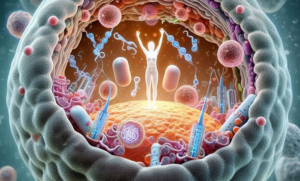

Cells are not static. They constantly repair, recycle, and replace internal parts.
Cellular renewal includes processes such as autophagy, mitochondrial repair, and protein turnover. These systems remove damaged components and maintain function.
Autophagy is one part of this renewal system. It forms structures called autophagosomes that surround damaged cell material. These structures then fuse with lysosomes, where the material is broken down and reused.
Other renewal processes include:
1. Mitochondrial Maintenance
Damaged mitochondria are removed through a process called mitophagy.
2. Protein Recycling
Old or misfolded proteins are broken down and replaced.
3. DNA Repair Mechanisms
Cells repair small genetic damage caused by stress or aging.
These systems respond to energy balance. When nutrients are constantly abundant, growth pathways dominate. When energy intake decreases, maintenance and repair become more active.
Research on cellular renewal has expanded in recent decades. Studies link proper regulation of these systems to metabolic health and aging patterns.
Cellular renewal does not require extreme measures. Balanced nutrition, physical activity, adequate sleep, and structured fasting windows all support internal repair systems.
Understanding the science helps align lifestyle with biological design.
- Good to Know
Repair and growth are opposing cellular states.
Periods of rest from constant intake support maintenance pathways.
- ☕ Tips for Today
- Maintain consistent sleep patterns.
- Avoid constant grazing between meals.
- Include light physical movement during fasting periods.
- 🔔 What’s Next


Was this Blog Post useful to you?